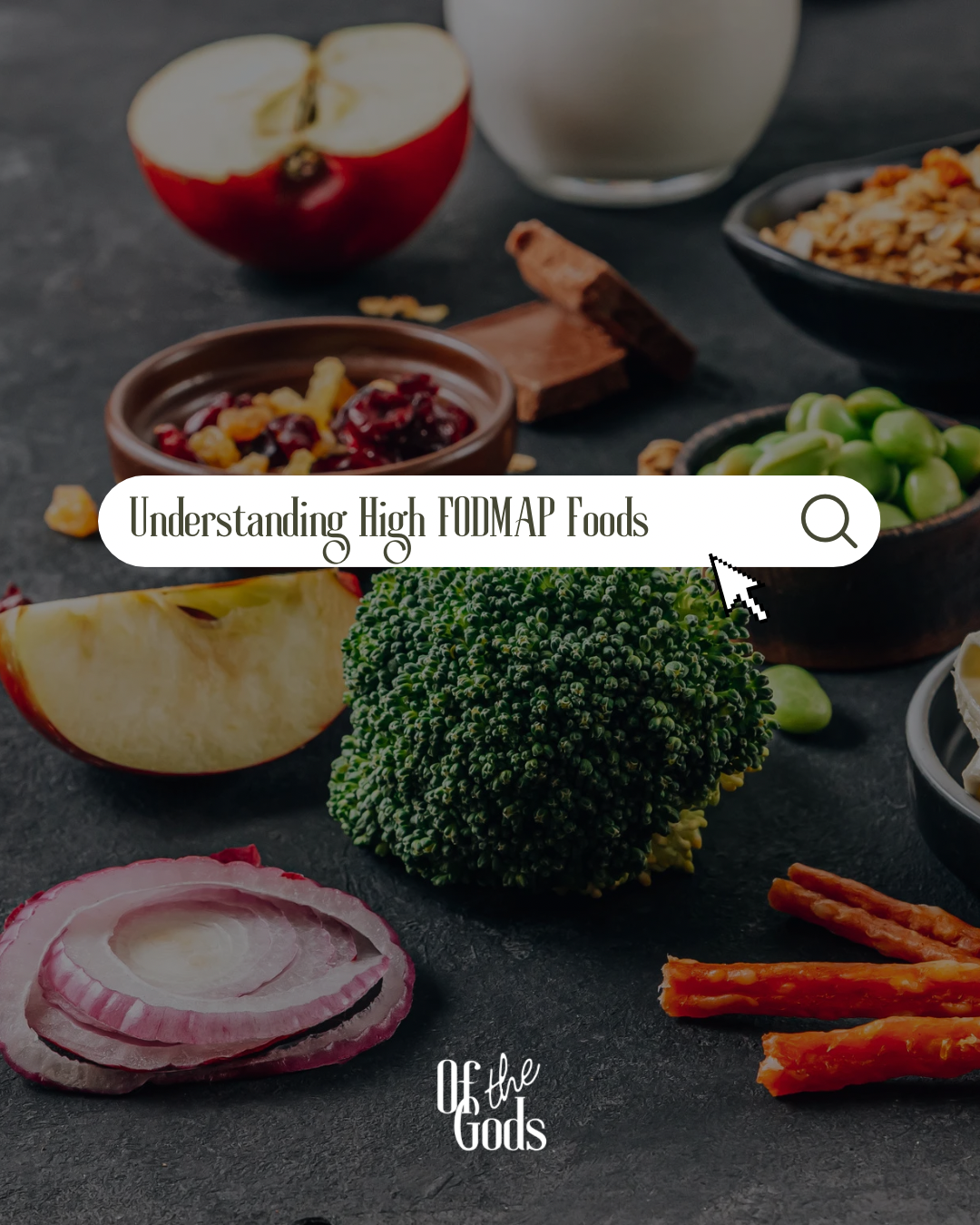
Understanding High FODMAP Foods + A Comprehensive List
What are FODMAPs?
FODMAP stands for fermentable monosaccharides, disaccharides, oligosaccharides, and polyols. Simply put, these are carbohydrates that ferment in the gut leading to potential digestive issues.
According to pre-defined, published cutoff levels, high FODMAP foods contain more than one:
0.3 grams of fructans and galacto-oligosaccharides (GOS) (0.2 grams for fruit/vegetables),
1.0 gram of lactose, 0.15 grams fructose in excess of glucose (0.4 grams for fruit/vegetables when fructose is only FODMAP present)
0.2 grams of mannitol/sorbitol or 0.4 total polyols.
How High FODMAPs affect the GI System
FODMAPs can increase water content in the small intestine, increase gas production (due to fermentation), and lead to excess production of short-chain fatty acids (which causes painful bloating, abdominal pain, bowel movement inconsistencies, and flatulence).
A comprehensive list of High FODMAP foods and their Low FODMAP alternatives
Grains: wheat, amaranth, barley, rye (swaps: brown rice, buckwheat, millet, oats, polenta, quinoa, tapioca, teff)
Dairy: buttermilk, milk, quark (over 6.35 oz), ricotta (over 7.05 oz), paneer (over 7.76 oz), custard, kefir, yogurt (swaps: cheddar cheese, swiss cheese, parmesan cheese, feta cheese, sour cream, ghee)
Garlic (swaps: garlic-infused oil, garlic powder, chives)
Onion (swaps: chives, scallions, leek leaves)
Fruit: apples, apricots, black/blue/raspberries, cherries, figs, grapes, mangoes, nectarines, peaches, pears, plums watermelon (swaps: kiwi, clementine, mandarin oranges, papaya, oranges, pineapple, passionfruit, starfruit, rhubarb, unripe bananas, limes)
Veggies: asparagus, fennel, cauliflower, Brussels sprouts, beets, snow peas, leeks (bulbs), butternut squash, mushrooms, Jerusalem artichokes (swaps: bok choy, bean sprouts, arugula, eggplant, cabbage, carrot, daikon radish, collard greens, jicama, green bell pepper, cucumber, yam, spinach, tomato (cooked), okra, kale, lettuce
Legumes: black beans, lentils, kidney beans, fava beans, chickpeas, butterbeans, black-eyed peas, baked beans, almonds, pinto beans, cashews, pistachios, soybeans, broad beans, split peas (swaps: eggs, tofu, tempeh, nuts and seeds)
Drinks: apple juice, coconut water, oat milk, kombucha, soy milk, orange juice, chai, chamomile tea, rum, dessert wine, fennel tea (swaps: black tea, coffee, green tea, peppermint tea, water, rooibos tea, white tea)
Sweetners: agave, honey, high fructose corn syrup, molasses, sugar-free mints and gums with sorbitol, mannitol, xylitol, or isomalt (swaps: sugar, maple syrup, stevia)
Who is a candidate for FODMAP Restriction?
It is important to consult with your PCP, a Registered Dietician, or a Gastroenterologist before making any all-or-nothing restrictions/changes to your current diet. Not everyone is the perfect candidate for taking High FODMAP foods out of your nutrition habits and routines. FODMAPs are nutritionally beneficial for the majority of the population. FODMAPs function like prebiotics, specialized plant fibers/carbohydrates that act as food and fuel to nourish the beneficial bacteria, probiotics, living in your gut.
A low FODMAP diet is not intended to be a long-term avoidance diet but is rather used as a diagnostic tool to identify foods that an individual can tolerate and which trigger a negative digestive response.